
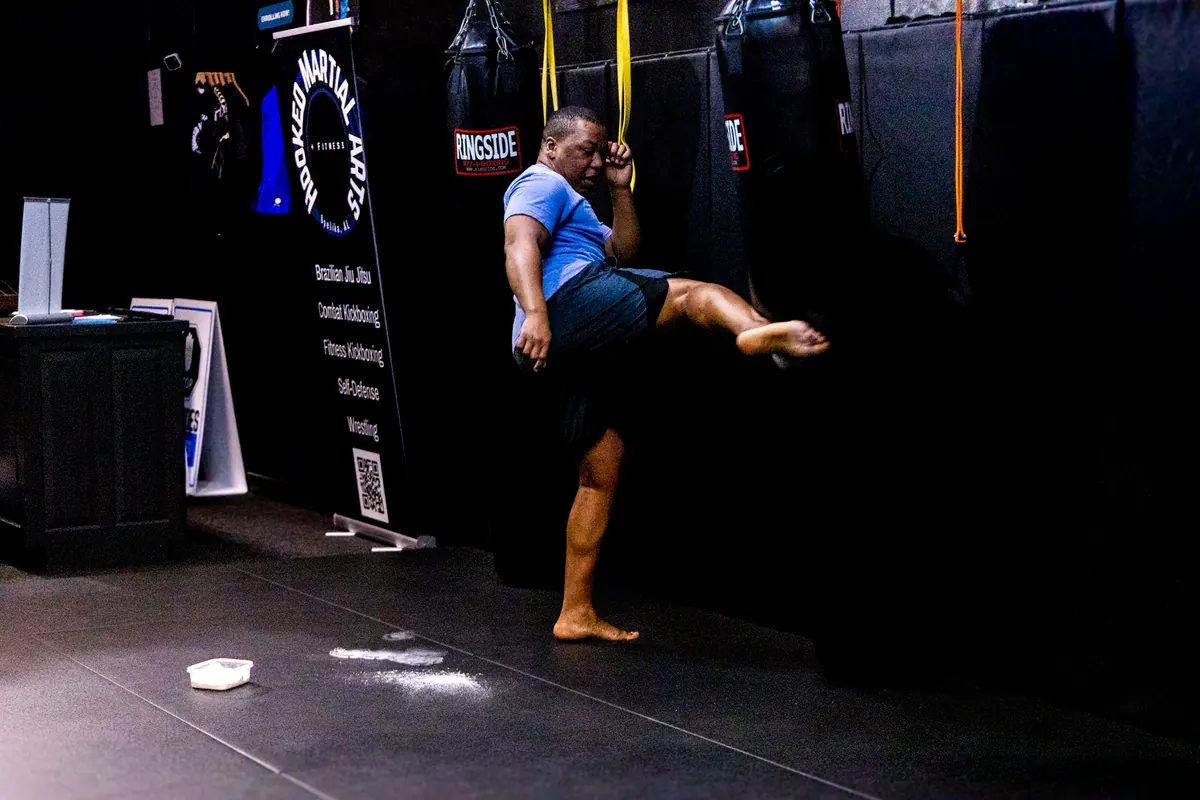
The notion that you should try to get “in shape” before your first martial arts class is a big misconception and often deters people from trying martial arts for the first time. The simple answer is: no, you don’t have to be in shape to start martial arts! This question is completely understandable, especially for beginners, and we’re here to explain why you don’t need a certain fitness level before beginning martial arts training.
Going to Classes to Get in Shape
The movements and activities associated with martial arts training are unique and challenging in their own way. There isn’t much someone can do beforehand to make learning a new martial arts style dramatically easier. While cardio or weightlifting can support your overall fitness for martial arts, the best way to improve is simply by attending classes consistently. The real progress comes from time spent on the mat.
Practice Makes Perfect
One of the best ways to improve in martial arts, like most skills, is practice. Practicing martial arts at home alongside taking regular classes can significantly improve your fitness over time.
While classes provide structure, professional coaching, and technical development, at-home training allows you to build consistency and strengthen your body between sessions. Over time, this steady repetition sharpens your technique and improves cardiovascular endurance and muscular control: helping you feel stronger and more confident every time you train.
Do I Need to Work Out in Addition to Attending Classes?
Like with most things, the benefits of martial arts classes will reflect the effort you put in.
Working out in addition to martial arts training is a great way to build stamina, strength, and overall conditioning. Martial arts itself is a fun and effective full-body workout that naturally improves coordination and endurance. Additional exercise can further prepare you for self-defense situations, build confidence, and develop discipline over time.
How Can I Practice Martial Arts at Home?After taking classes with our certified instructors, there are excellent ways to continue your martial arts practice at home.
Flexibility: Flexibility is a key part of martial arts because it improves power, speed, and control. Greater range of motion allows kicks to reach higher and movements to feel smoother and more efficient. It also reduces the risk of injury during training. You can improve flexibility at home with consistent stretching and mobility work. Focus on hamstrings, hips, and hip flexors since they support most kicks and stances. Slow, controlled stretches held for 30 to 60 seconds, along with light dynamic leg swings before training, can make a steady difference over time.
Balance: Balance is essential in martial arts because it supports strong kicks, stable stances, and controlled movement. Improved balance leads to cleaner strikes and smoother transitions. You can build balance at home by practicing slow, controlled kicks while standing on one leg and strengthening your core with exercises like planks. Consistent practice will steadily improve your stability and confidence.
Spatial Awareness: Spatial awareness is crucial in martial arts because it helps you understand distance, timing, and positioning during movement. You can improve it at home by practicing shadow sparring and footwork drills while staying mindful of your space and body alignment.
Remember, you don’t have to be fit to attend your first martial arts class. Martial arts for beginners is designed to help you grow at your own pace. No matter your fitness level or experience, we encourage everyone to try a class and discover their potential. Here at Hooked, we believe in helping everyone find their strength.